
Growing to Give
Our Mission
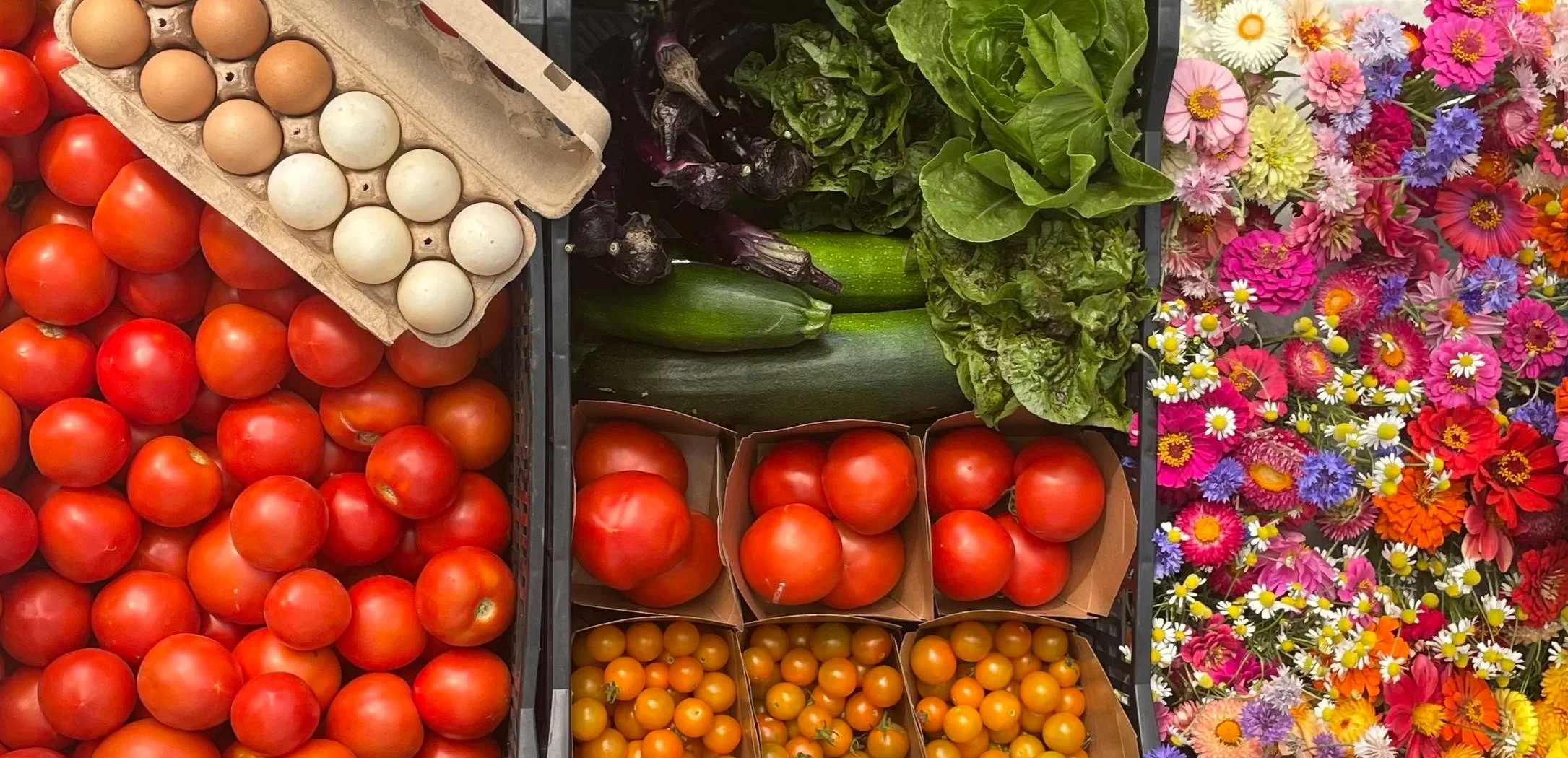
Whole Harvest Farm gives away for free its whole harvest (farmers-market-quality produce that is sustainably grown) to children in need in Santa Barbara County. We also teach children about the art of homecoming: farming, cooking, and caring for the land.
Our Vision
We aspire to do our work guided by awareness of the sacred: the sacredness of people, the sacredness of food, and the sacredness of our Earth without which we cannot live.
The Need
Food Insecurity and Children’s Health
Despite Santa Barbara’s reputation for wealth, 1 in 6 children are “food insecure,” meaning they have limited, uncertain access to the food necessary for a healthy life. In light of Santa Barbara County’s affluence, this is a juggernaut of a statistic.
And food insecurity in Santa Barbara County is worsening.
At Whole Harvest Farm, we address this food insecurity—specifically among children—but address it differently.
Instead of distributing canned goods and processed food, or distributing rescued produce and “farm seconds,” we deliver the entirety of our delicious fresh harvest directly to organizations serving children in need. Giving this way honors the dignity of the recipients. It is also healthier and tastier.
Much of the food given to children in need is “calorically dense and nutritionally thin,” often high in sodium, sugar, and harmful chemicals. Or it is surplus produce, sometimes past its prime. That children in need often receive such food is an unfortunate irony.
Common sense and extensive research tell us that poor nutrition contributes to poor health: mental health and physical health, states of being which are not twain. Here are two startling and revelatory statements:
1). According to Tufts University, “about 85% of all healthcare spending is related to the management of diet-related chronic diseases.”
2). According to Harvard University, “multiple studies have found a correlation between a diet high in refined sugars and impaired brain function—and a worsening of symptoms of mood disorders, such as depression. Studies have compared ‘traditional’ diets, like the Mediterranean diet and the traditional Japanese diet, to a typical ‘Western’ diet and have shown that the risk of depression is 25% to 35% lower in those who eat a traditional diet.”
If—as Hippocrates said—food should be our medicine, shouldn’t those most in need eat the best food available?
At Whole Harvest Farm, we believe the answer to that question is an enthusiastic Yes.
Disconnection and Children’s Health
Many of our young people hunger not only for food but a sense of meaning and relevance. Many spend much of their time indoors on screens, living lives of progressive disembodiment, disconnected from their land and their communities. The healthy development of our children requires not only nourishing food but nourishing activity. By giving young people a chance to volunteer—to learn about farming, cooking, and caring for the land, together in service of the sacred whole—we aim to provide a crucial nourishment that is often lacking in their lives. And the hours the children spend here at Whole Harvest Farm are fully offline.
The State of Our Earth and Children’s Health
Health is not a place apart. And our beautiful planet—of which we and our children are an indivisible part—is ailing in many ways. For the sake of the children and all the other creatures of the “Earth Household,” we at Whole Harvest Farm work toward an agriculture and a food system that—in Aldo Leopold’s extraordinary words—seek to “preserve the integrity, stability, and beauty of the biotic community.” Put differently (and quoting Wendell Berry), “We must understand what the health of the earth requires, and we must put that before all other needs.”
Our Partners
Our partner organizations we proudly serve include:
If you are an organization interested in receiving food, please contact Director of Operations, Laura Macker.
Give to Help Us Grow
With life as short as a half-taken breath, do not plant anything but love.
—Rumi
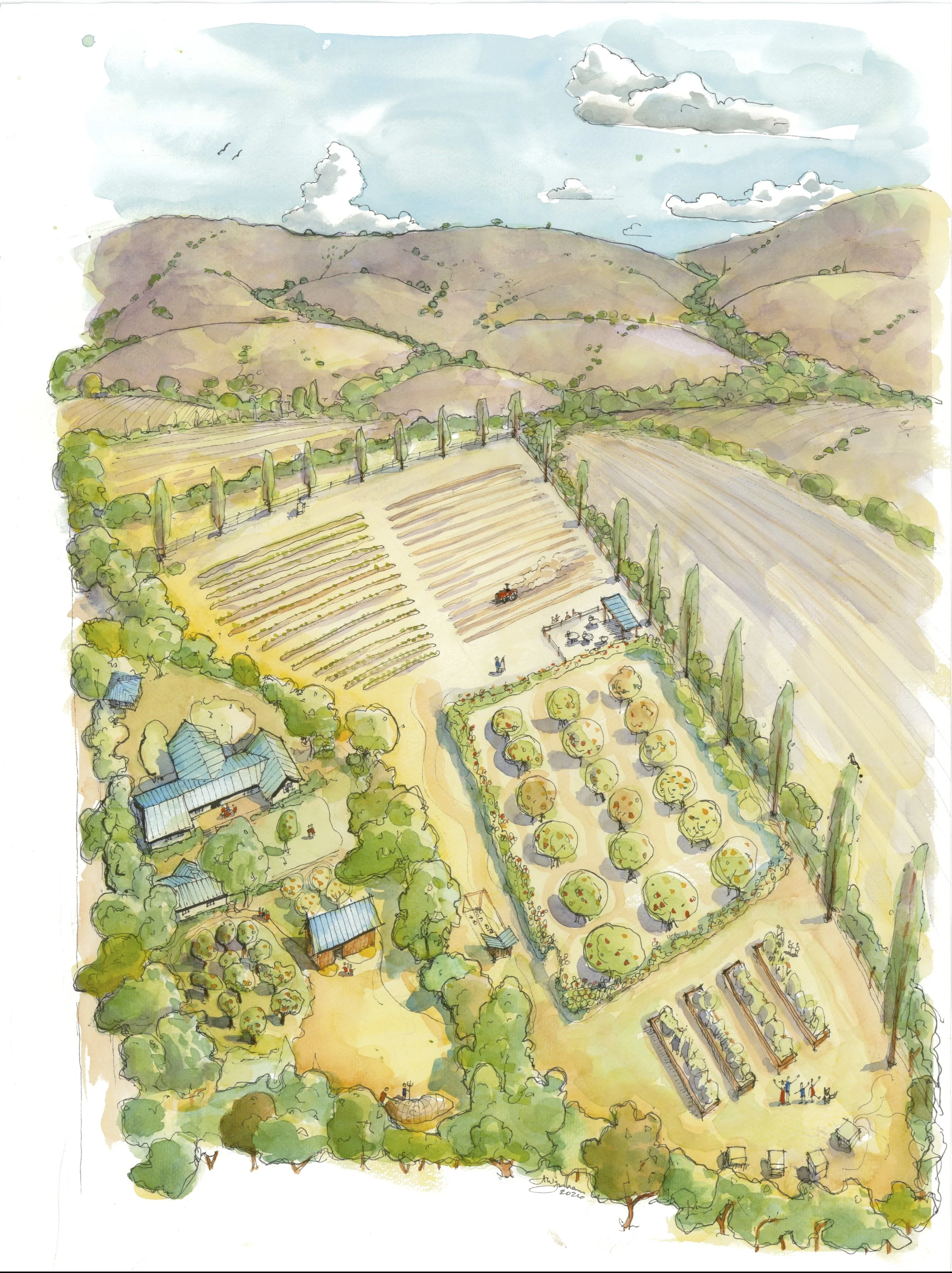
Watercolor of Whole Harvest Farm by Alex Wyndham
A vision without a task is but a dream;
a task without a vision is but drudgery;
a vision with a task is the hope of the world.
–an inscription on a church wall in Sussex, England